Interactive Data Security Software Demos

Try interactive demos for DLP, DRM, UEBA, and cloud data security tools without scheduling a live demo 

Explore Interactive Demos for Modern Data Security Solutions 

Discover how Fortra data security software helps your team monitor sensitive data, set up security policies, investigate risky activity, and stop data leaks. 


Cloud Data Protection

Cloud data security tools monitor sensitive data, apply adaptive policies, and manage information shared between cloud applications, users, and devices. 

Unified Policy Engine

With a unified policy engine, it is easy to create, edit, and extend an authentication policy, data at rest policy, and data in motion policy across SaaS, private enterprise, and web apps. 

Take the tour >
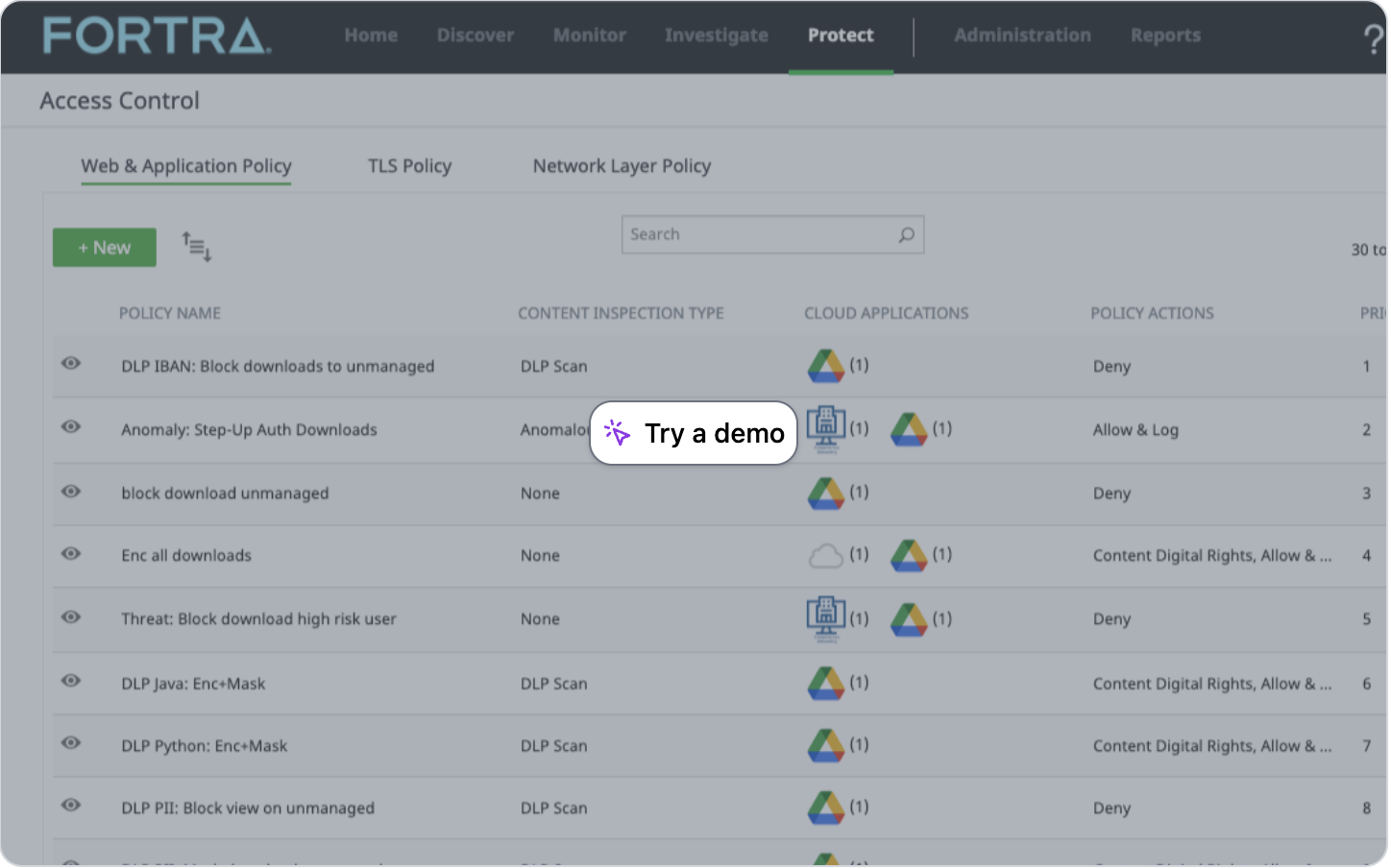
SSE - Unified Policy Engine

Define Policy Frameworks

Access control policies allows you to apply continuous and adaptive security controls to user activity. See how easy it is to create authentication policies, data-at-rest (API) policies, data-in-motion (Access) policies, and decryption (Dynamic DRM) policies. 

Take the tour >
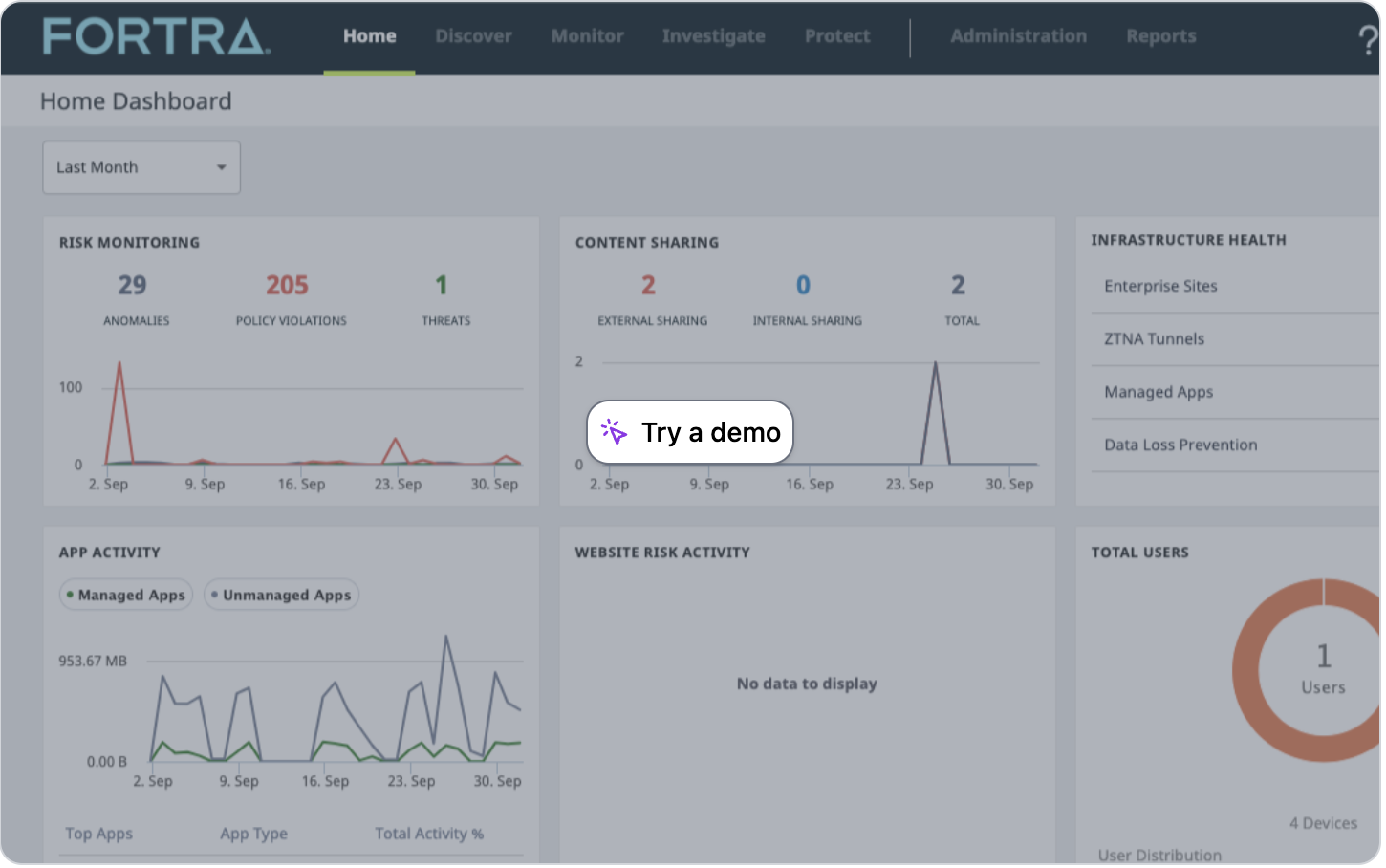
SSE - Define Policy Frameworks

Monitor and Audit Activity

With a unified policy engine, you can quickly see how effective your security policies are across your SaaS, private enterprise apps, and websites.

Take the tour >
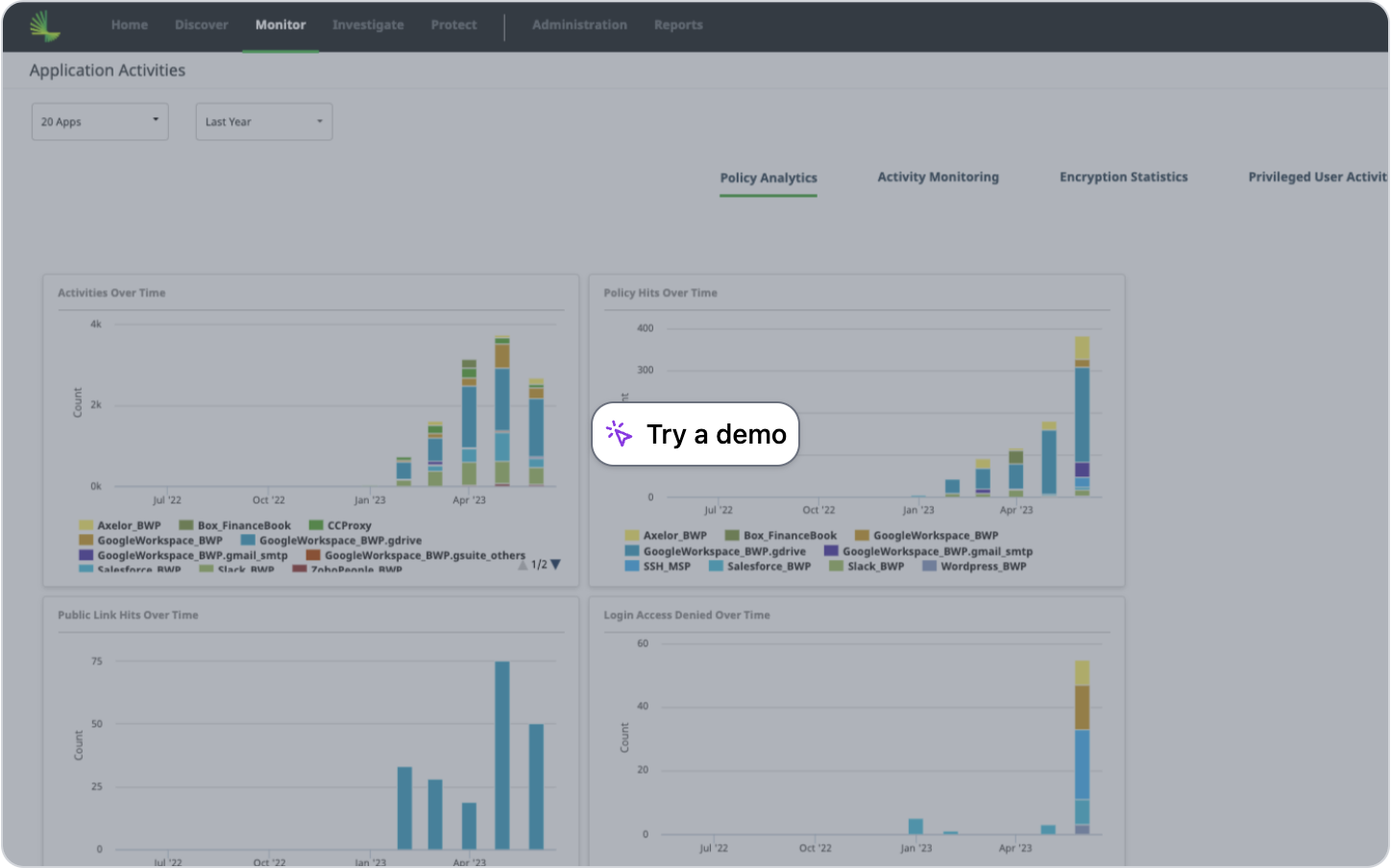
 

SSE - Monitor and Audit Activity

Extended Context Rules

Contextual awareness plays an important role in defining and enforcing security measures tailored to your unique environment.

Fortra SSE understands the language of modern web apps, allowing for deeper knowledge about where and how your data is being used. 

Take the tour >
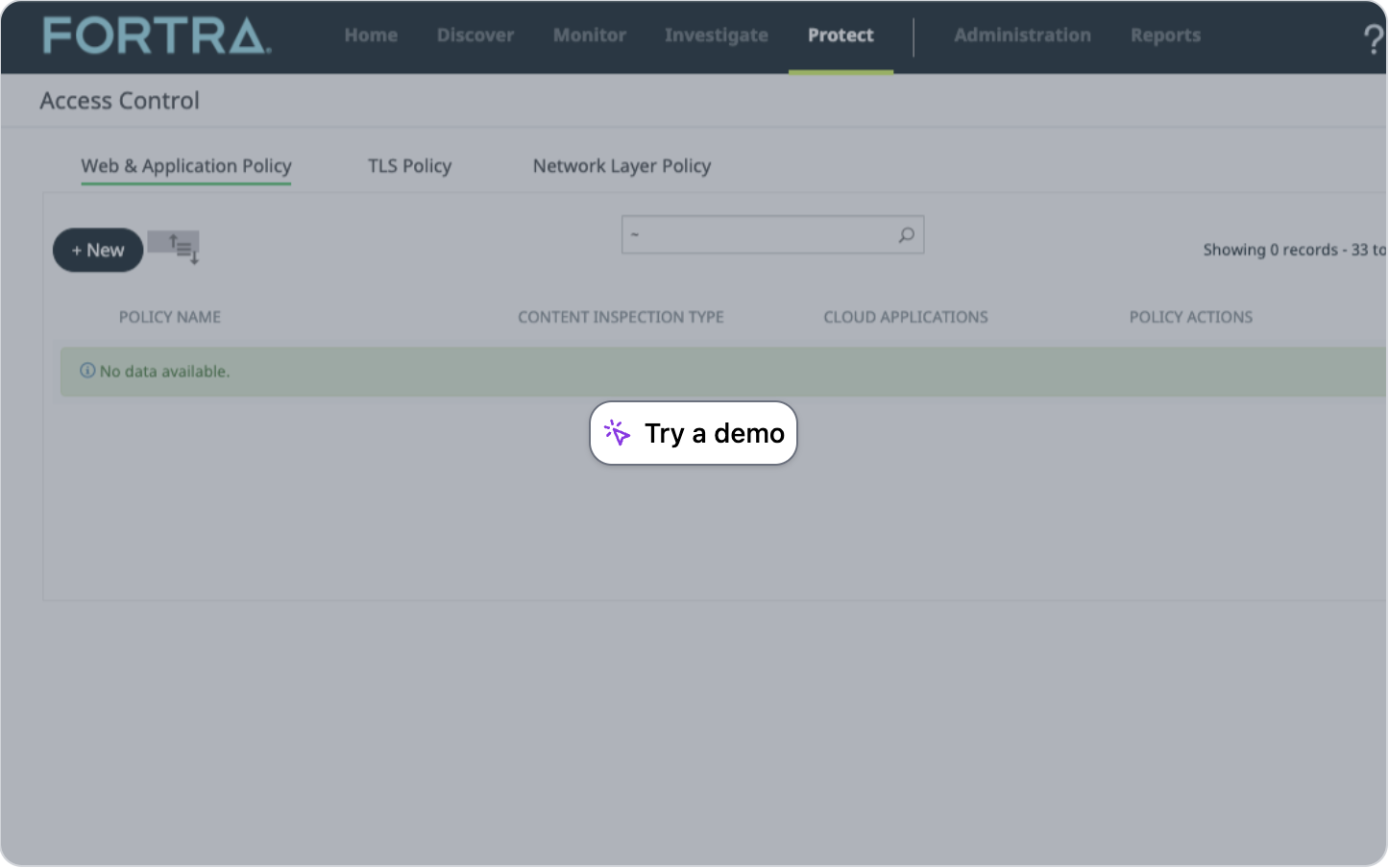
SSE - Extended Context Rules

DRM

Digital rights management (DRM) solutions let you control file access, set sharing permissions, and protect content to prevent unauthorized data exposure. 

Quarantine Potential Violations

Determining a data protection strategy can often be complex. By quarantining a file, your security administrator can thoroughly review it for potential security violations before implementing any data protection measures.

Take the tour >
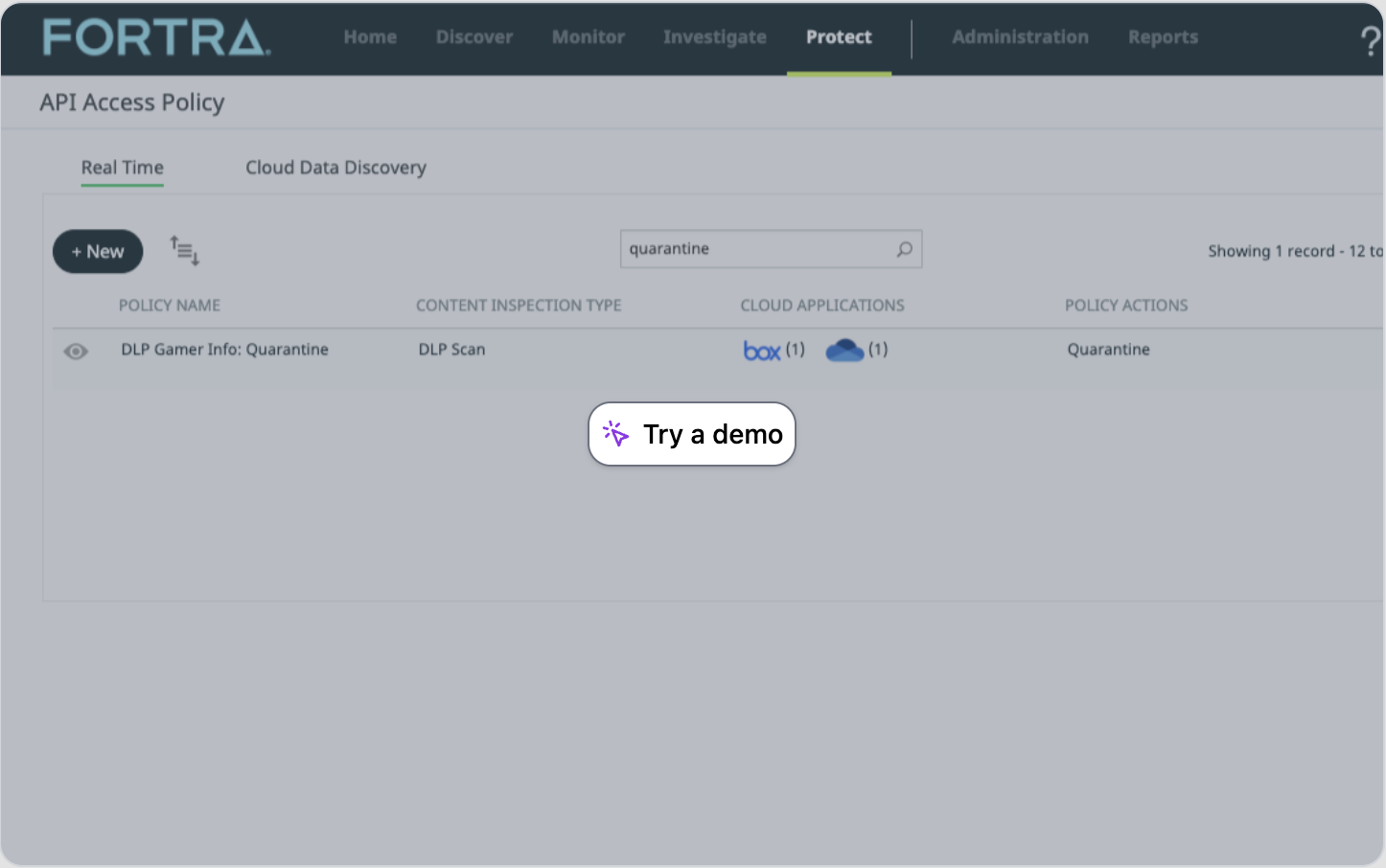
DRM - Quarantine Potential Violations

Adjust Sharing Permissions

With Fortra SSE, Digital Rights Management (DRM) extends beyond content-specific protections to include sharing permissions, and you can very easily create a policy that detects a publicly accessible share and rescind the public share.

Take the tour >
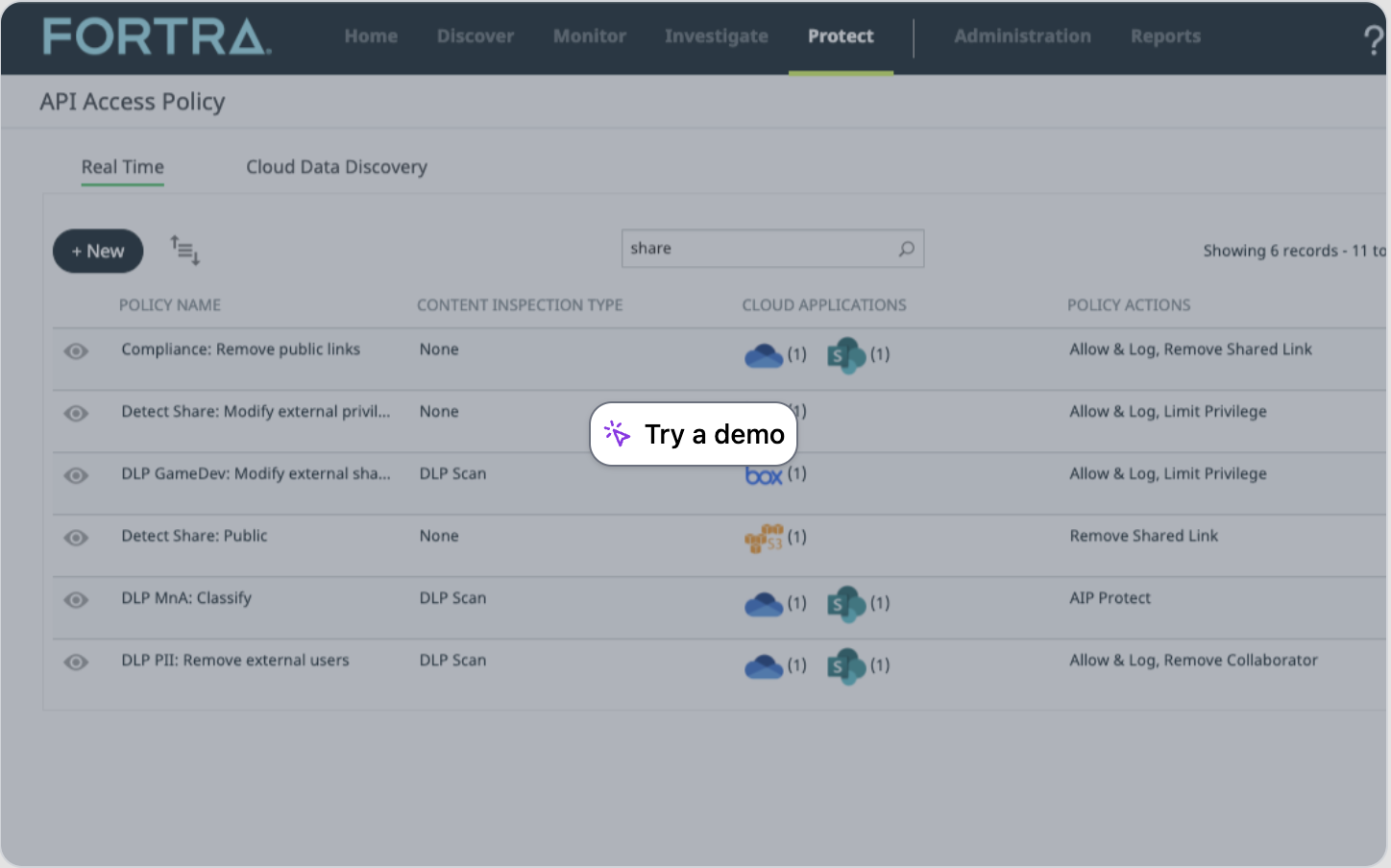
DRM - Adjust Sharing Permissions

Apply Content Protections

When DLP detects sensitive information, you can automatically apply numerous Digital Rights Management (DRM) protections to prevent accidental data leakage. With content digital rights, you determine how to protect sensitive information.

Take the tour >
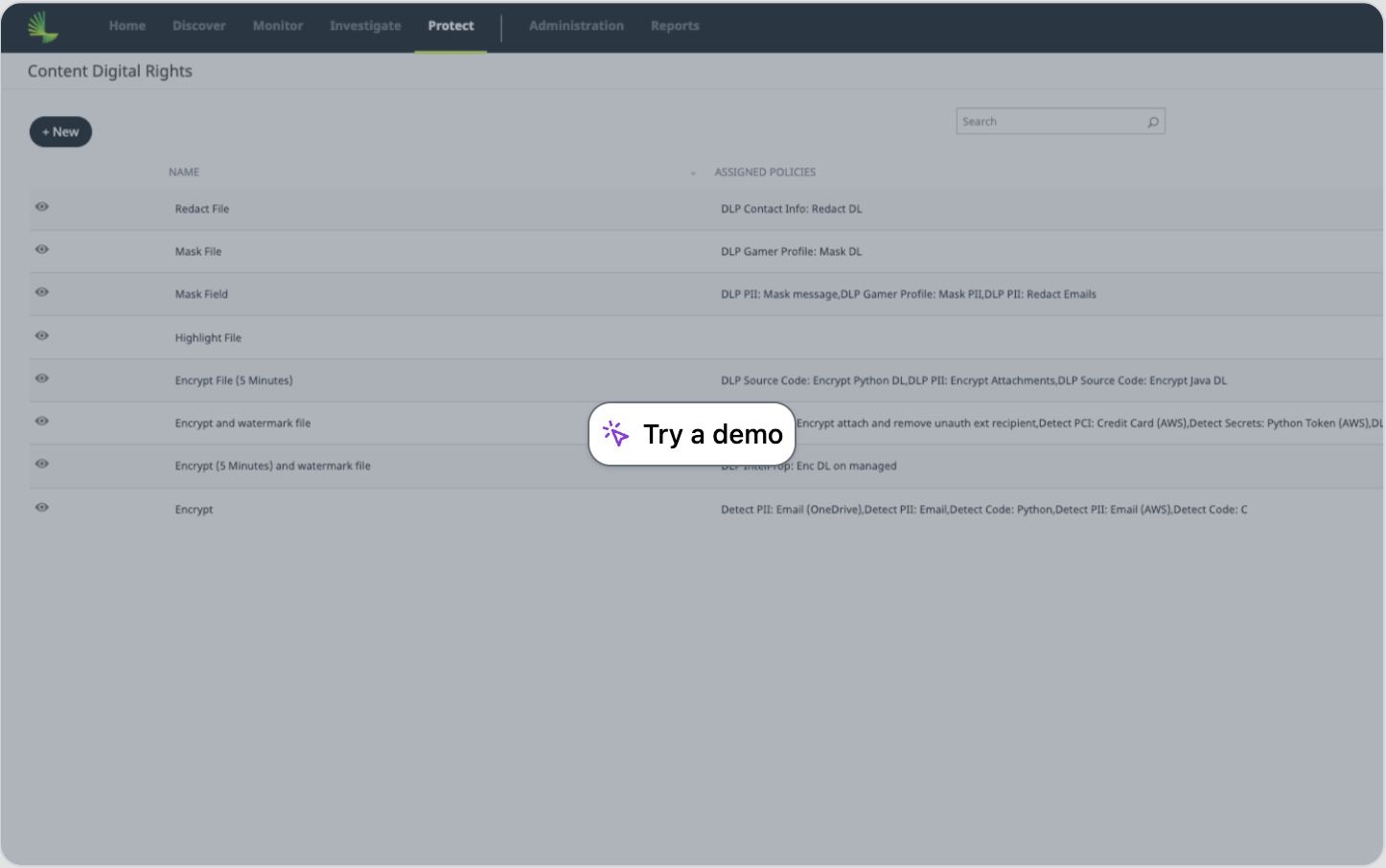
DRM - Apply Content Protections

UEBA

User and Entity Behavior Analytics (UEBA) software looks at user activity and risk patterns to spot suspicious behavior and insider threats. 

Defining Adaptive Thresholds

With adaptive thresholds, you have the ability to influence the user's overall risk level. The unified policy engine can leverage a user's risk level as a contextual attribute to determine if an action should be allowed, denied, or restricted.

Take the tour >
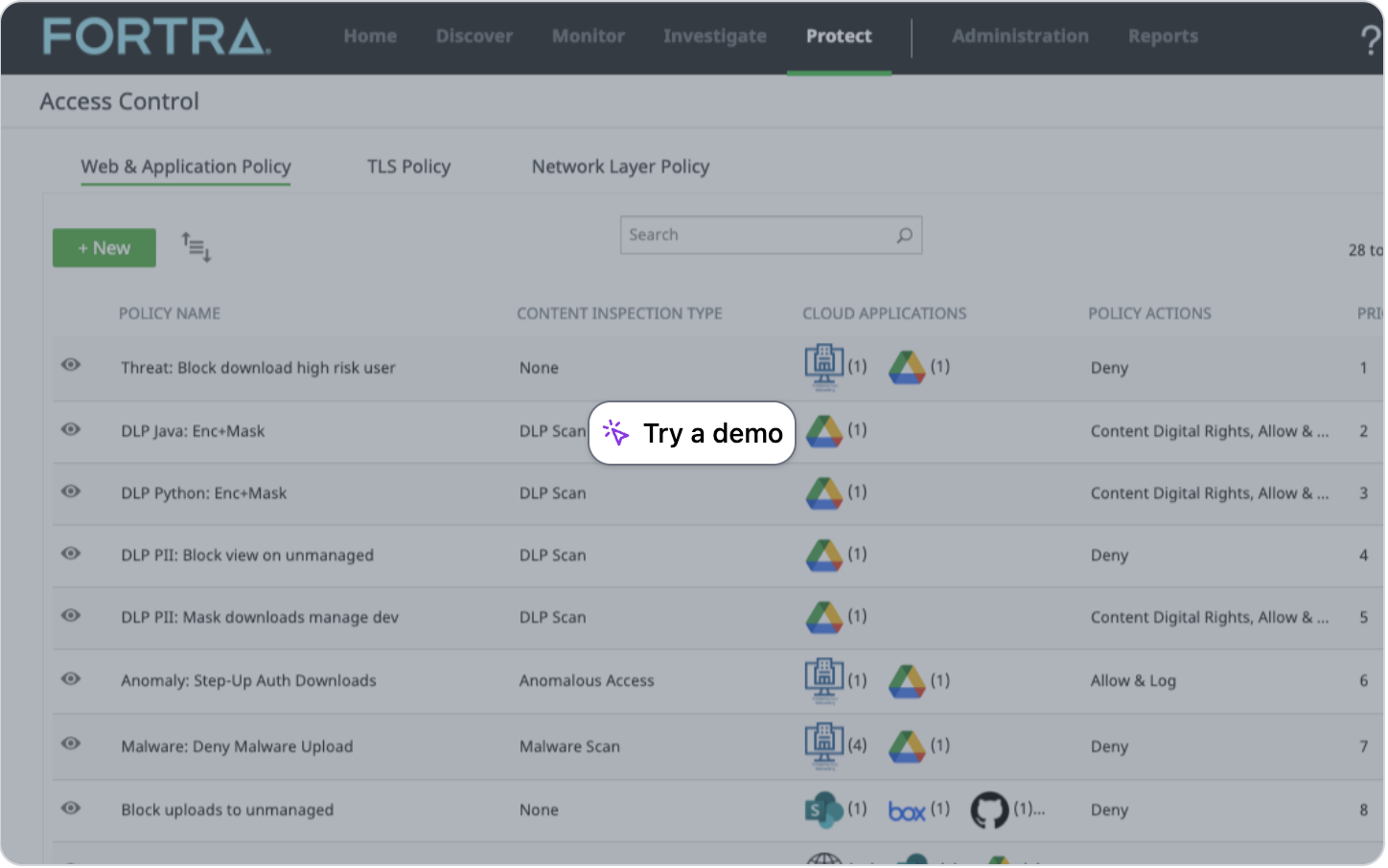
UEBA - Defining Adaptive Thresholds

Reviewing Anomalous Activities

By leveraging machine learning, User and Entity Behavior Analytics (UEBA) monitors and analyzes user behaviors to identify anomalous activities that could indicate potential security threats. This approach enhances threat detection and also enables you to respond quickly to suspicious actions.

Take the tour >
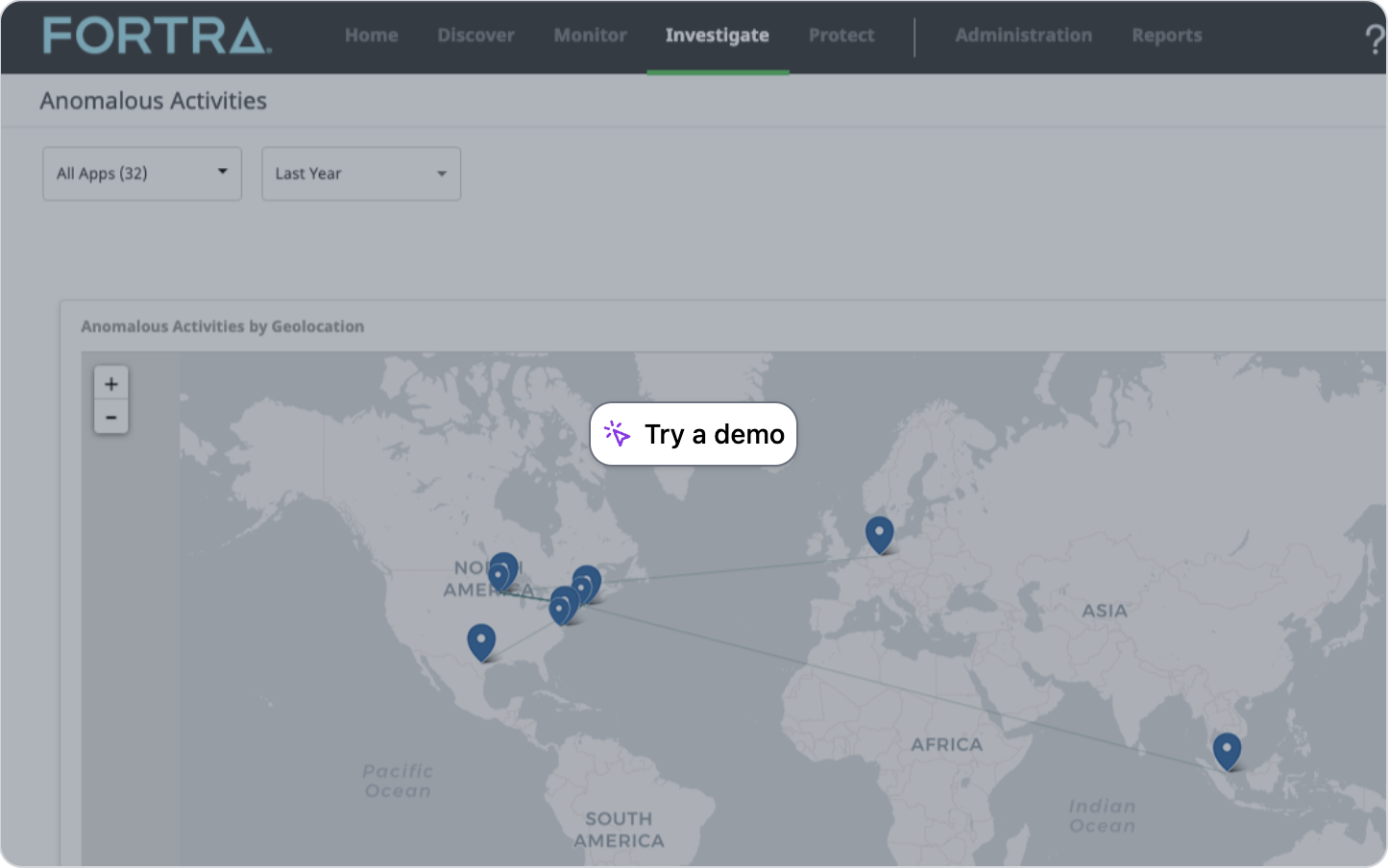
UEBA - Reviewing Anomalous Activities

Managing User Risk

With User and Entity Behavior Analytics (UEBA), machine learning creates a profile for each user to generate a risk score that you can use as a context in your security policies.

Take the tour >
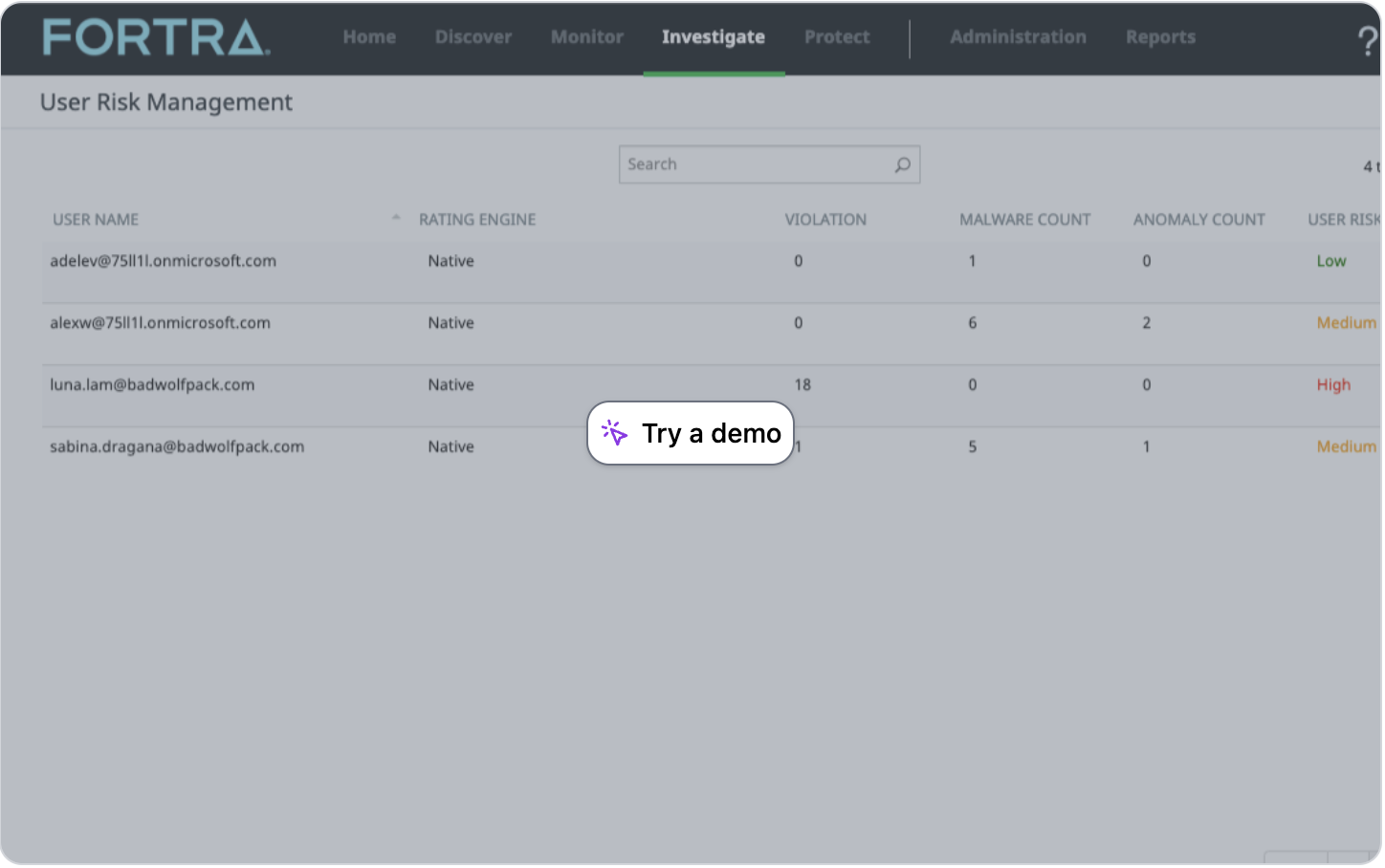
UEBA - Managing User Risk

Anomalous User Behavior

The anomalous activities dashboard provides a centralized view of potential security risks within your environment. A compromised user account may exhibit a geolocation anomaly, appearing to be in multiple, geographically distant locations at the same time.

Take the tour >
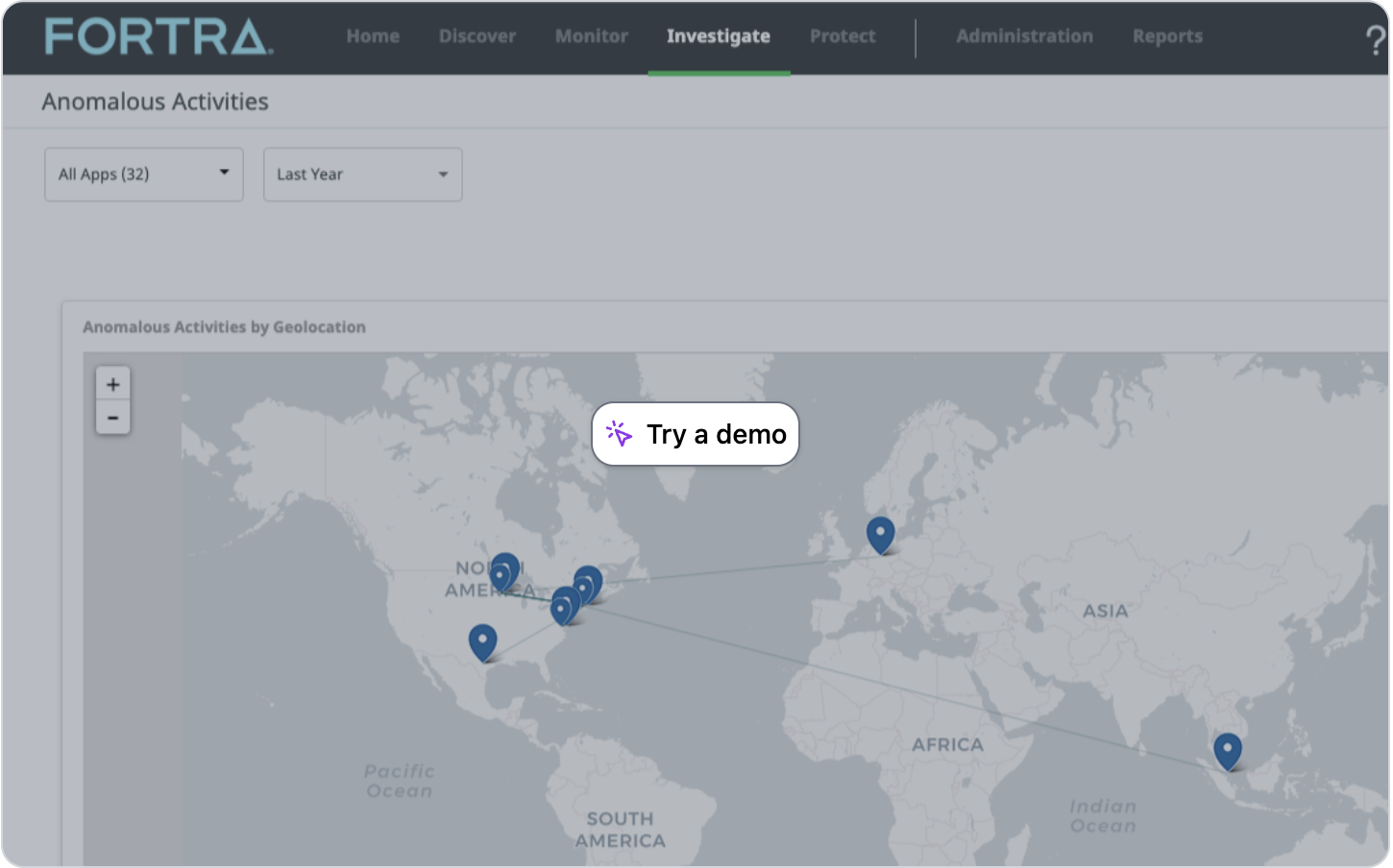
UEBA - Anomalous User Behavior

DLP

Data loss prevention tools monitor sensitive information, enforce security policies, and help stop accidental or unauthorized data leaks. 

Fine Tuning Enforcement

Data loss prevention rules can be further refined to help reduce the potential of detecting false positives. When you are looking for data contained within files (unstructured data), you can leverage document rules to provide greater granularity into specific file criteria.

Take the tour >
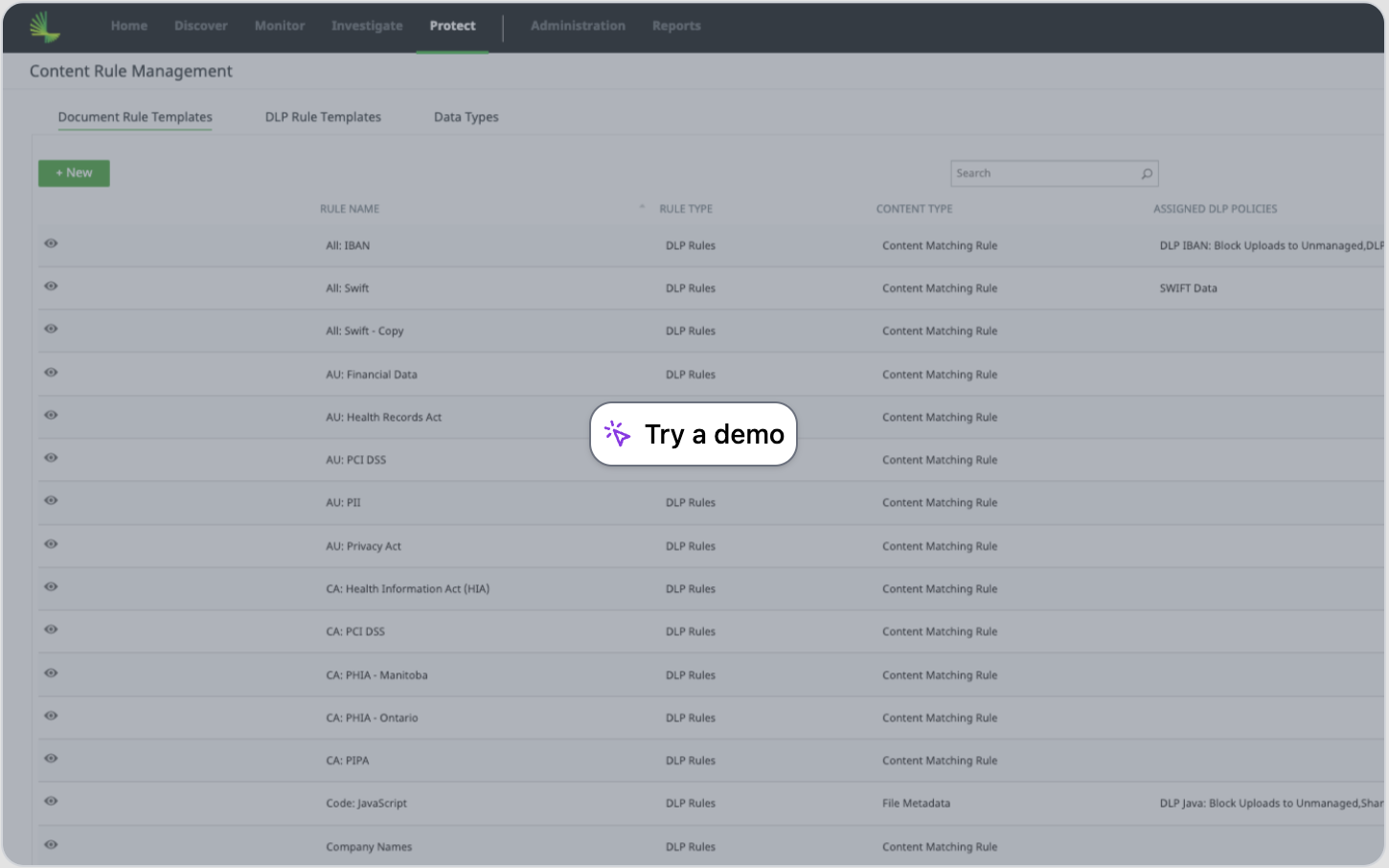
DLP - Fine Tuning Enforcement

Defining Compliance Rules

Data loss prevention (DLP) compliance rules enable you to consolidate various data types into a single configuration that meets specific regulatory standards. Start with one of our 300+ preconfigured compliance regulations or create rules specific to your data compliance needs.

Take the tour >
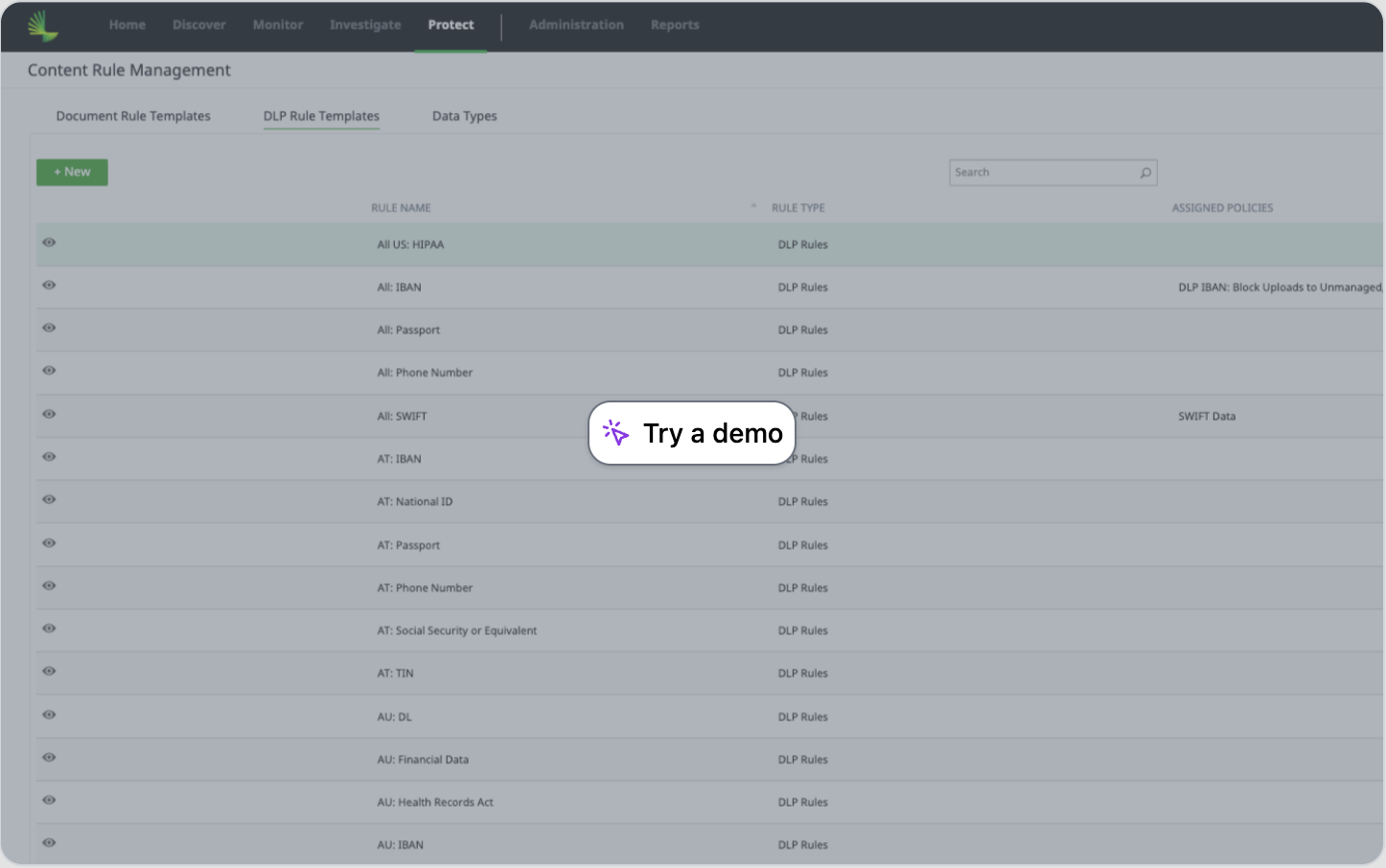
DLP - Defining Compliance Rules

Discovering Data Types

Understanding your important data types is crucial for effective data loss prevention (DLP). To quickly get started with discovering your data, you can leverage a library of roughly 900 pre-configured data types.

Take the tour >
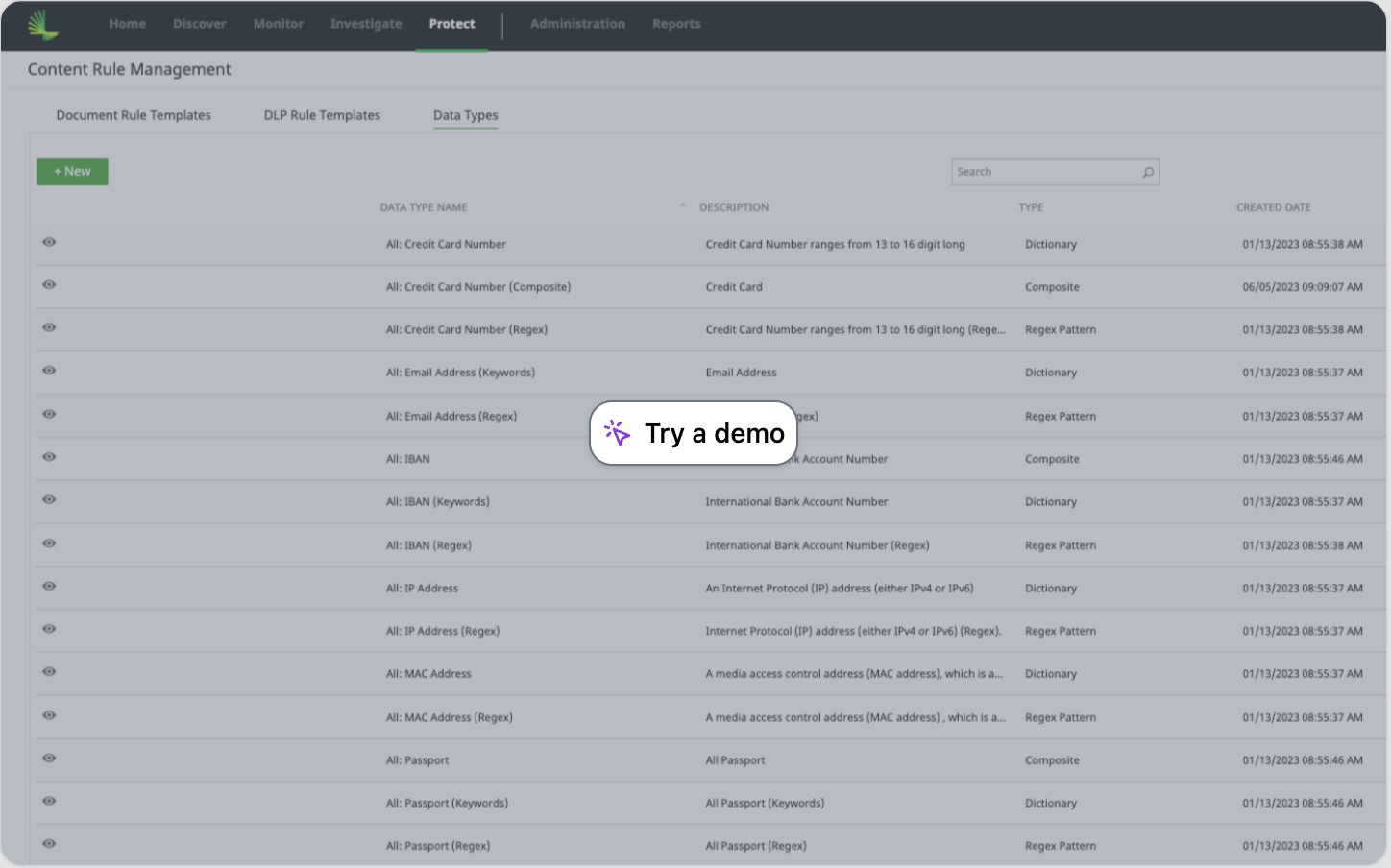
DLP - Discovering Data Types

Data Compliance

Data compliance identifies regulated data, applies appropriate policies, and enforces security requirements in cloud environments. 

Prevent Data Leaks on Social Media

Your users are sharing information on social media to build their personal brand, connect with their professional network, and showcase their expertise or achievements.

Fortra SSE can help prevent such leakage by monitoring and controlling data flow across platforms, ensuring that sensitive information remains protected from unintended exposure.

Take the tour >
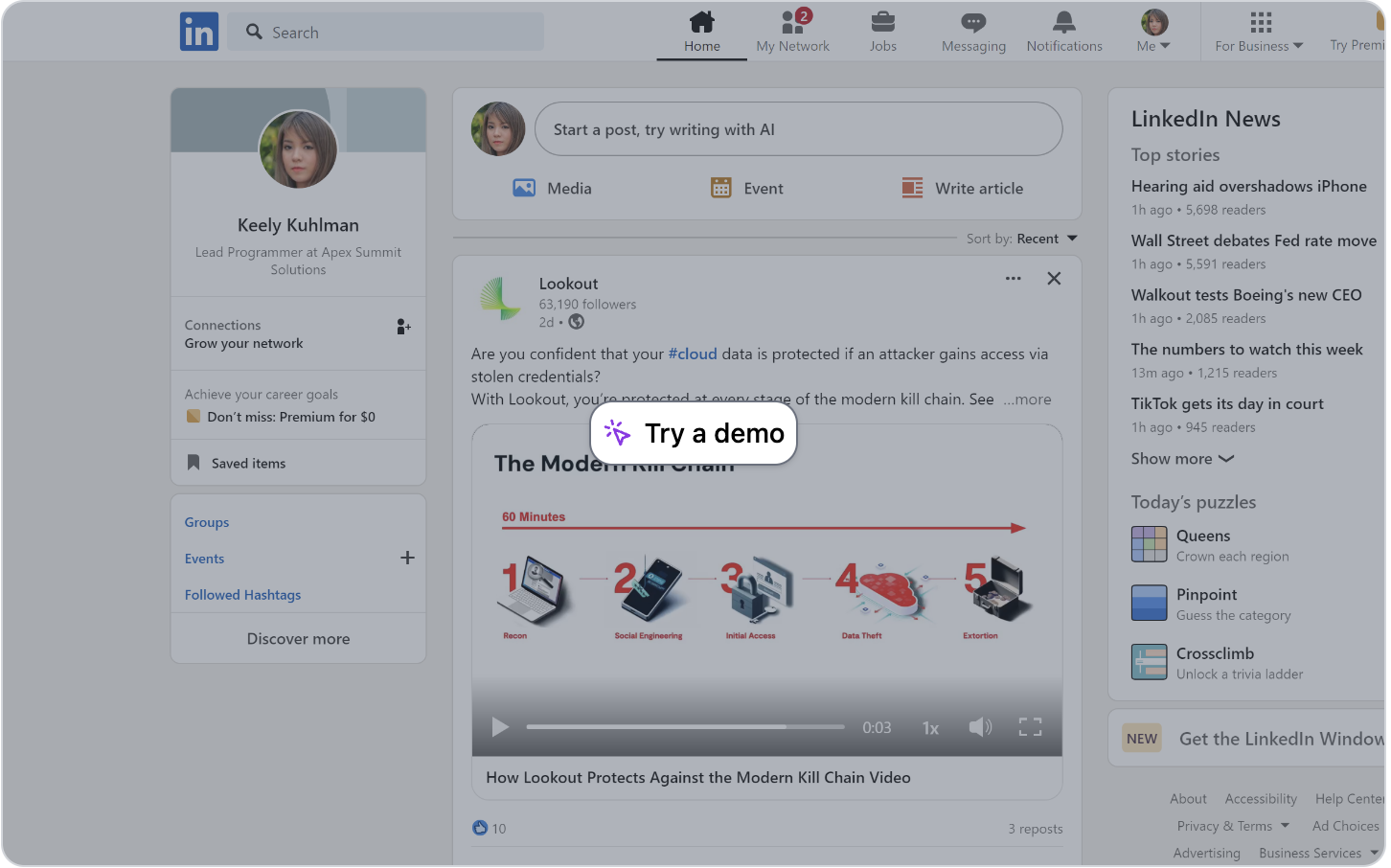
Data Compliance - Prevent Data Leaks on Social Media

Ready to Get Started?

Connect with a Forta data security expert to discuss your team’s needs.

Schedule a Live Demo

FAQs about Fortra Data Security Demos

Fortra offers a broad portfolio of data security solutions designed to help organizations monitor sensitive information, reduce data exposure, and respond to modern security threats across cloud, endpoint, email, and web environments. 

The platform supports several core security functions, including: 

  • Data loss prevention (DLP) 

  • Digital rights management (DRM) 

  • User and Entity Behavior Analytics (UEBA) 

  • Cloud data protection 

  • Insider risk detection 

  • Compliance monitoring 

  • Threat detection and response 

  • Secure access controls 

  • Social media data protection 

  • Adaptive policy enforcement 

Organizations use these tools to identify sensitive data, apply automated protections, monitor user behavior, and investigate suspicious activity from a centralized platform. 

Data loss prevention (DLP) 

Fortra DLP software enables security teams to monitor and control how users handle sensitive information. Organizations can create policies to identify regulated or confidential data and automatically block, quarantine, encrypt, or restrict content. 

Interactive demos on this page show how teams can: 

  • Define compliance rules 

  • Discover sensitive data types 

  • Refine enforcement settings 

  • Reduce false positives 

  • Monitor risky activity 


Cloud data protection 

Cloud data protection tools help organizations monitor SaaS applications, manage user access, and apply security policies to data transferred between cloud environments. 

Fortra supports security workflows for: 

  • SaaS monitoring 

  • Policy enforcement 

  • Access control 

  • File sharing governance 

  • Adaptive authentication 

  • Activity auditing 


UEBA and insider risk monitoring 

User and Entity Behavior Analytics (UEBA) tools use machine learning to detect unusual user activity that may indicate compromised accounts, insider threats, or risky behavior. 

Security teams can use UEBA workflows to: 

  • Detect anomalous activity 

  • Assign user risk scores 

  • Investigate suspicious behavior 

  • Trigger adaptive security responses 

  • Monitor high-risk users 


Digital rights management (DRM) 

Digital rights management features help organizations control access to and sharing of sensitive files. Teams can apply protections to limit copying, sharing, downloading, or public exposure of sensitive content. 

The demos on this page show how organizations can: 

  • Apply automated content protections 

  • Restrict public file sharing 

  • Quarantine sensitive files 

  • Control document permissions 

  • Protect intellectual property 

Organizations use Fortra data protection software to reduce security risk while enabling employees to access the tools and applications they need to work effectively. 

Modern businesses manage sensitive data across cloud platforms, endpoints, collaboration tools, web applications, and remote environments. Security teams require visibility into how users access, share, and transfer information without impacting productivity. 

Fortra helps organizations balance security controls and operational flexibility by integrating monitoring, analytics, policy enforcement, and automated remediation in a unified platform. 

Below are some common data security goals teams achieve with Fortra. 

Preventing data leaks 

Organizations use DLP policies and content protections to reduce accidental exposure of sensitive information via email, cloud applications, public links, file sharing, or social media. 

Supporting compliance requirements 

Security teams use compliance policies and preconfigured data types to support requirements for regulated data, industry standards, and internal governance. 

Detecting insider threats 

UEBA workflows help organizations identify suspicious user behavior, unusual access patterns, and activities that may indicate compromised accounts or insider risk. 

Monitoring cloud environments 

Cloud data protection tools help security teams understand user interactions with SaaS applications and sensitive cloud-based information. 

Protecting intellectual property 

Organizations use DRM protections and access controls to prevent unauthorized distribution of sensitive files, proprietary information, and confidential business documents. 

Yes, this page offers interactive product tours so visitors can explore Fortra data security software without scheduling a live sales demonstration. 

The demos simulate real workflows and product experiences directly in the browser. Users can follow guided walkthroughs at their own pace and explore security capabilities before contacting a product specialist. 

Depending on the demo, visitors can review: 

  • DLP policy creation 

  • User activity monitoring 

  • Compliance configurations 

  • DRM protections 

  • Adaptive security controls 

  • Cloud application monitoring 

  • Insider risk workflows 

These interactive demos help technical evaluators, security leaders, compliance teams, and IT stakeholders understand the platform before requesting a live consultation. 

Why interactive demos matter 

Many security software vendors require a scheduled sales meeting before product access. This demo center allows visitors to explore real workflows immediately through guided product tours. 

Users can review: 

  • Policy creation workflows 

  • Compliance configurations 

  • User risk analytics 

  • Security dashboards 

  • Activity monitoring 

  • Adaptive access controls 

  • Automated remediation actions 

Organizations in nearly every industry use data security solutions to protect sensitive information, reduce exposure, and support compliance requirements. Industries handling large volumes of regulated, confidential, or business-critical data often require additional controls for monitoring, access management, and threat detection. 

Healthcare 

Healthcare organizations use data security tools to protect patient records, control access to sensitive information, and support privacy requirements. 

Financial services 

Banks, lenders, and financial institutions use data protection software to monitor confidential financial data, reduce fraud risk, and secure customer information. 

Government and public sector 

Government agencies use data security platforms to protect sensitive records, monitor insider risk, and support national and organizational security requirements. 

Technology and software 

Technology companies use DRM, DLP, and cloud security tools to protect intellectual property, source code, and confidential development data. 

Manufacturing 

Manufacturers use data security tools to secure proprietary processes, engineering documents, supply chain data, and operational systems. 

Legal and professional services 

Law firms and professional services organizations use data security controls to protect confidential client information, contracts, and regulated records. 

Yes. In addition to data security solutions, Fortra offers brand protection solutions to help organizations detect and respond to digital threats targeting their company, employees, customers, and public assets. 

Fortra's brand protection services provide teams with: 

These solutions help organizations investigate malicious activity, reduce customer risk, and disrupt fraudulent campaigns before they cause reputational or financial harm. 

Brand protection and data security often work together 

Many cyber threats involve both brand abuse and the exposure of sensitive data. For example: 

  • A phishing attack may attempt to steal credentials and sensitive business data. 

  • A compromised account may expose regulated information. 

  • Social engineering attacks may target employees through impersonation campaigns. 

  • Fraudulent domains may distribute malware or collect confidential data. 

Organizations often combine brand protection and data security solutions to reduce exposure to both external and internal threats.