UAE Information Assurance (IA) Regulation Compliance

Simplify United Arab Emirates Information Assurance compliance with Fortra

Fortra Gives You Control Over UAE IA Compliance

Text

Developed by NESA and introduced in 2019, the UAE Information Assurance (IA) Regulation establishes a framework for strengthening cyber resilience through a set of enforceable security controls. Compliance requires more than documented policies — demanding that organizations embed continuous visibility, automated enforcement, auditability, and integrated security controls into day-to-day operations. Fortra takes the guesswork out of UAE IA compliance with an integrated platform of data security tools aligned to regulatory controls.

Why Organizations Are Acting Now 

  • AI adoption is accelerating the flow of data across digital systems  

  • Pressure to keep up with the UAE IA updates based on global standards like ISO/IEC 27001 and emerging threat vectors 

  • Compliance gaps can expose operations to costly disruption  

  • Supply chain risks demand tighter control over sensitive data  

  • Clear compliance evidence helps protect customer and partner trust  

Image
Why Organizations Are Acting Now
Image
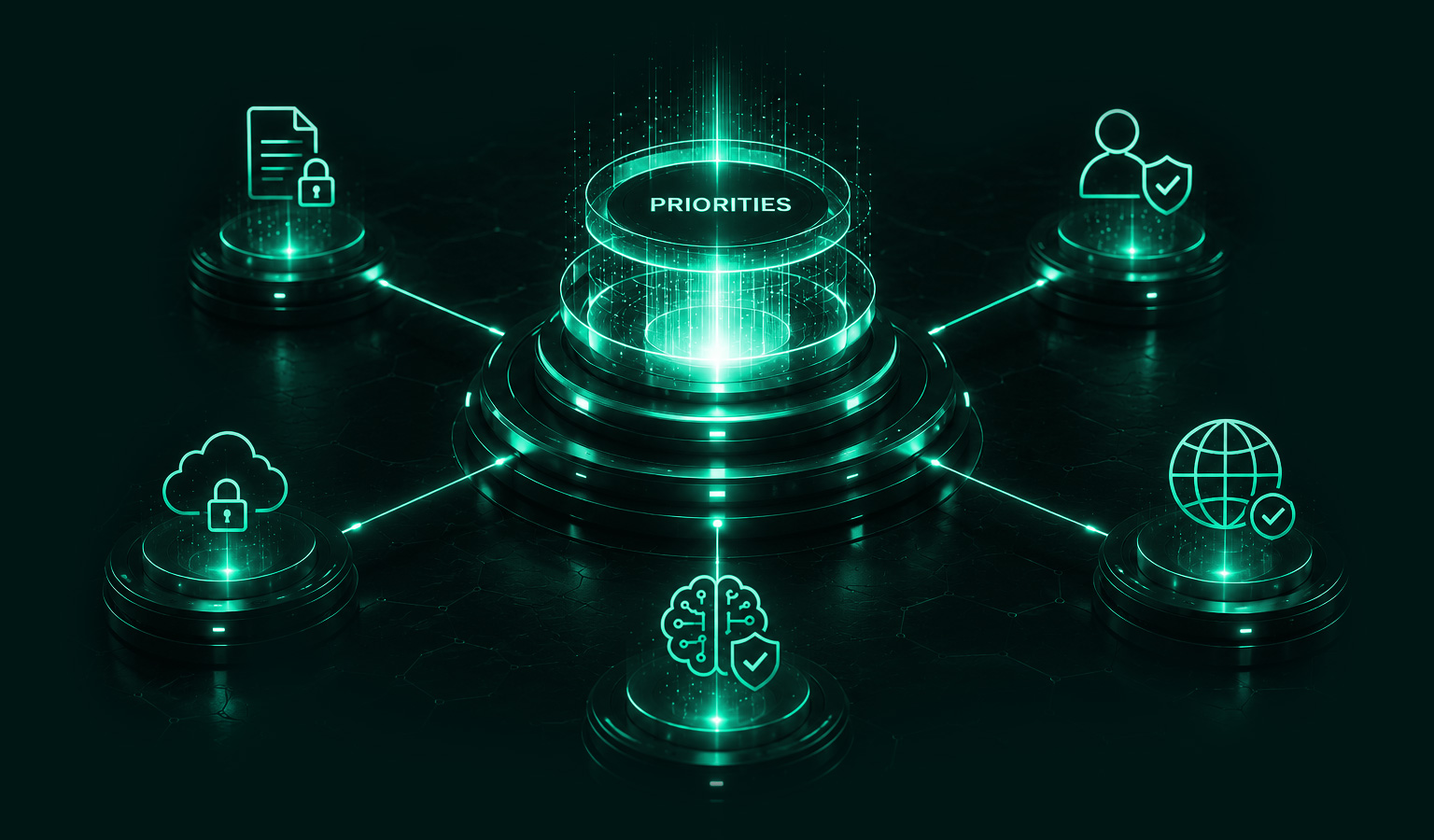
Key UAE IA Priorities

Key UAE IA Priorities 

  • Classify and protect critical information assets 

  • Strengthen access control and endpoint security for hybrid and remote environments 

  • Secure third-party, cloud, and supply chain risk exposure 

  • Align controls with ISO/IEC 27001 and global best practices 

  • Build cyber resilience against AI-driven threats 

How Fortra Solutions Support UAE IA Compliance

Fortra helps organizations accelerate UAE IA compliance by improving visibility and control over sensitive data across email, cloud, endpoints, collaboration tools, and AI applications. Automated protection, insider threat detection, and audit reporting reduce risk while supporting a resilient, policy-driven security program.  


Asset Management and Information Classification (IA T1.3.1, T1.3.2) 

Control T1.3.1 requires organizations to develop an information classification scheme based on information value, legal and regulatory requirements, and sensitivity. It mandates that automated systems can access this classification to enforce specific protections.  


How Fortra helps  
  • Applies persistent metadata, labels, watermarks, headers, and footers across documents and emails  

  • Enables user-driven, policy-driven, and automated classification workflows  

  • Shares classification metadata with downstream security controls, including DLP, encryption, and monitoring solutions  

AI-powered Compliance Readiness  

Text

Fortra helps organizations protect sensitive data from AI-related risks while using AI to strengthen security. AI-powered discovery and classification improve data visibility, while integrated controls help prevent data leakage, govern AI use, and support continuous compliance readiness with regulations like UAE IA. 

Featured Resource

Text


Fortra's Solutions for UAE IA Compliance
 

READ TECHNICAL BRIEF

Talk to a Fortra Expert About UAE IA Compliance

Cybersecurity leaders can feel confident about their UAE IA compliance posture with Fortra’s proven approach to data security and regulatory compliance.  

REQUEST UAE IA DEMO

FAQs

The United Arab Emirates Information Assurance Standard, or UAE IA, is a national cybersecurity standard for protecting information assets, supporting systems, and critical information infrastructure. It establishes management and technical controls for areas such as risk management, asset protection, network security, access management, incident response, third-party security, and business continuity.  

The UAE IA Standard applies to government entities and critical infrastructure operators in the United Arab Emirates. Keep in mind that banking, insurance, telecommunications, healthcare, transport, and energy companies are all considered critical infrastructure in this context. The UAE IA framework is also valuable as a voluntary compliance framework for other types of commercial businesses in the UAE. 

The UAE IA contains 15 security control “families,” with six management control families and 9 technical control families: 

Management control families 

  • M1 Strategy and Planning 

  • M2 Information Security Risk Management 

  • M3 Awareness and Training 

  • M4 Human Resource Security 

  • M5 Compliance 

  • M6 Performance Evaluation and Improvement 

Technical control families 

  • T1 Information Asset Management 

  • T2 Physical and Environmental Security 

  • T3 Operations Management 

  • T4 Network Security 

  • T5 Identity and Access Management 

  • T6 Third Party Security 

  • T7 Information Systems Acquisition, Development and Maintenance 

  • T8 Information Security Incident Management 

  • T9 Information Systems Continuity Management 

Buyers should look for software that supports the UAE IA control areas relevant to their environment, including asset visibility, data classification, secure configuration management, vulnerability management, access control, security awareness training, and audit evidence. Because the standard is technology-agnostic, organizations can select tools that fit their infrastructure and risk profile rather than relying on a prescribed product. 

The standard includes information asset management controls and addresses the identification, management, and protection of information according to business and security requirements. Data classification software can help organizations identify sensitive information, apply appropriate classifications, enforce handling policies, and maintain records of data-related activity.  

Third-party security is a dedicated technical control family within the UAE IA Standard. Organizations should evaluate whether prospective security platforms can help them maintain visibility and control when information is accessed, processed, stored, or shared through vendors and other external parties using solutions that enable data loss prevention (DLP) and data security posture management (DSPM).  

Yes. Version 2.1, released in 2025, references recognized frameworks and practices including ISO/IEC 27001:2022, ISO/IEC 27002:2022, ISO/IEC 27005:2022, NIST Special Publication 800-53 Revision 5, CIS Critical Security Controls Version 8, and the Dubai Electronic Security Center Information Security Regulation Version 3.  

NESA stands for the National Electronic Security Authority, the entity established to protect communications networks and information systems in the UAE. NESA was later renamed the Signals Intelligence Agency, or SIA. Although “NESA compliance” remains a common search term, buyers should evaluate solutions against the current UAE Information Assurance Standard published by the UAE Cyber Security Council.