Digital Risk Protection (DRP) is rapidly gaining attention among CISOs and security professionals. Once seen as a subset of Digital Threat Intelligence (DTI), DRP has evolved into a distinct security discipline, recognized by analyst research, including the Gartner Hype Cycle, for its ability to address a wide range of external cyber threats. Many organizations now rely on DRP daily to protect digital assets, but for those new to the concept, it’s important to understand how DRP differs from threat intelligence and why it’s becoming essential for defending against external attacks.
Recent studies highlight the growing focus on cyber-risk management among executives and regulators. DRP solutions are expanding quickly, offering a broad array of threat detection and response capabilities that enhance both the scope and depth of external threat protection. Despite its rapid growth, some confusion remains about the overlap between DRP and digital threat intelligence, and how organizations should prioritize and integrate each approach.
Why Digital Risk Protection?
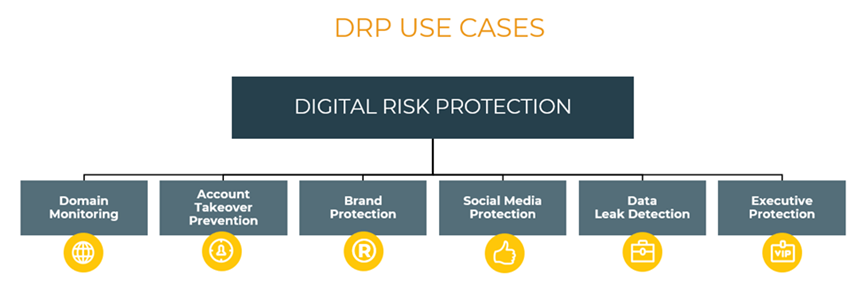
As a result, DRP acts as a first line of defense, helping organizations monitor and take down look-alike domains, prevent malicious account takeovers, safeguard brand and executive reputation, detect and respond to social media threats, and identify potential data leaks before they escalate.
Digital Risk Protection vs. Digital Threat Intelligence: What Sets Them Apart
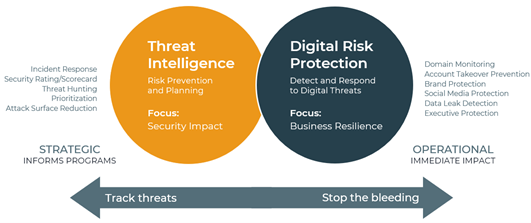
While DRP helps enterprises detect and stop active external threats in real time, digital threat intelligence takes a longer-term, strategic approach. It systematically gathers and analyzes large datasets to predict potential threats, inform decision-making, and protect internal resources before attacks occur.
DTI uses investigative processes to assess the potential security impact and severity of emerging threats. Its goal is to map the full risk landscape of an organization, anticipate vulnerabilities, and allocate resources for optimal protection. Common applications include incident response planning, developing security ratings and scorecards, prioritizing threats strategically, and assessing an organization’s attack surface to reduce exposure.
Although thorough and resource-intensive, threat intelligence gives organizations the foresight and capabilities to identify and mitigate risks as they emerge. It’s not a standalone solution. Maximizing DTI's value requires complementary security investments and mature programs to fully defend against threats.
Which Should Come First?
As cyber threats continue to grow, stretching both budgets and resources, it’s no surprise that security teams often struggle to decide where to focus. In reality, DRP and threat intelligence are most effective when used together as complementary parts of a broader security program. The key is evaluating an organization’s strategic and operational priorities to determine where to invest first.
Traditional threat intelligence excels at mapping long-term strategic threats but isn’t designed for rapid mitigation of active external attacks. DRP, by contrast, is immediately actionable, adaptable, and operationally focused, enabling security teams to detect and neutralize threats in real time.
Another strength of DRP is its flexibility. It doesn’t rely on program maturity or company size, allowing organizations to implement protections incrementally and layer additional functions as their security strategy evolves. This approach lowers the barrier to entry, helps organizations quickly realize value, and ensures effective defense against their specific external threats.