I think it is safe to say that we’re living in the social media age. My mom checks my Facebook Messenger status to see if I’m online in order to question why I haven’t responded to her text messages. My mother-in-law sends me memes daily. I know more about what is going on in my siblings lives from status updates instead of actual conversations. In fact, I doubt I’d remember anyone’s birthdays without Facebook telling me daily who is another year older.
We feel like passing acquaintances and people we met that one time at a conference 20 years ago are friends because we see their lives via social media. We join groups with like-minded individuals and trust them because they have the same interests as we do. The algorithm knows what we like and feeds us more of the same. We see sales in our communities, deals that are too good to be true, and some people’s innermost thoughts that, honestly, shouldn’t ever be shared.
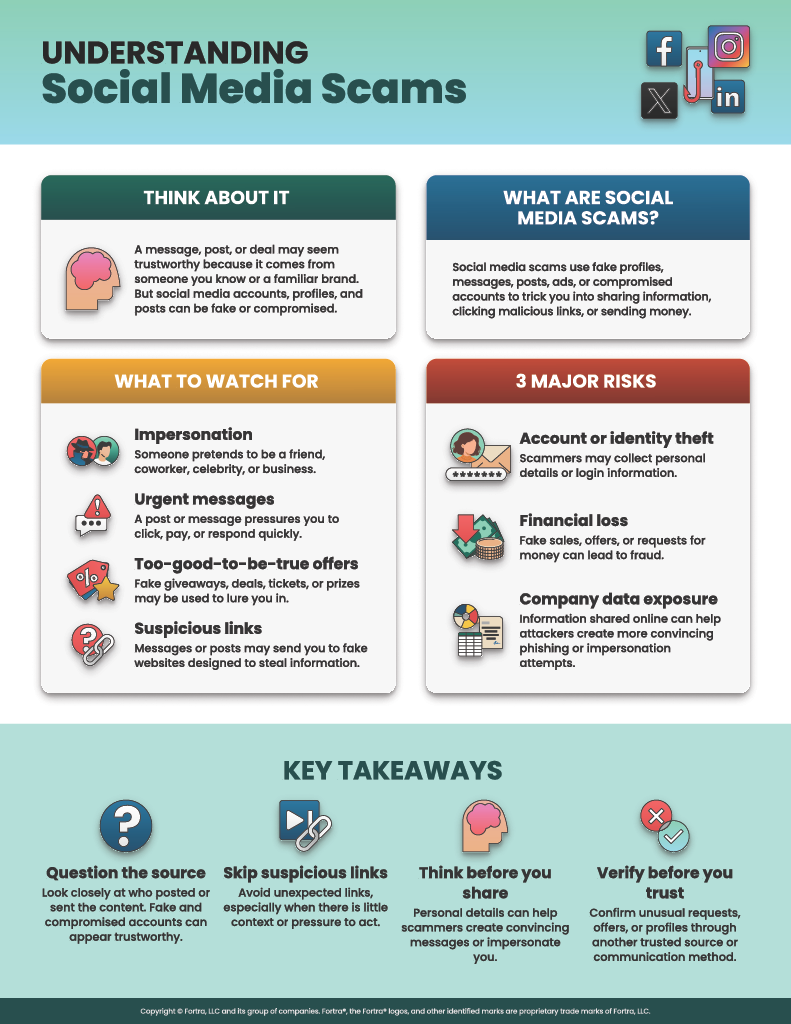
The problem with this feeling of trust and closeness is that it is easier for people to be taken advantage of, or put another way, easier to be scammed. I’m a member of a local Buy-Nothing group, where people give away everything from leftovers to antiques, electronics to groceries. These days, it is more common to see people asking for things that they need, things that days later are posted for sale by the same person. This is a very basic and very common scam, but, hopefully, the person who was trying to be helpful isn’t out too much.
The bigger problem is the scams that catch you for a lot more money. Unless you’ve been living under a rock for the past year, you’ve probably seen story after story on the news about people being scammed by fake Taylor Swift concert ticket sales. Here, there have been multiple stories, some of which are still playing out in the courts. It’s all too common to see a friend or a friend of a friend make a post about tickets and to use that implied trust to justify the non-traditional purchase method.
Then there are the scams that spread through sharing. You may have gotten a message lately about the anniversary celebrations of Tim Hortons or Costco from a friend. All you need to do is click a link and fill out a form, and you’ll then send that same scam to all your friends, and they’ll rinse and repeat. You may also have seen a friend sharing a post for a rental scam, but when you ask about it, they originally shared a post about a lost animal. These are both very common social media scams that I’ve personally seen friends fall for on a regular basis. We see, we trust, we want to help, we share.
This is why you shouldn’t share things from people you don’t know. You shouldn’t click links that you don’t know where they’re going, especially unsolicited links sent via a message without any context or other message. This is why you shouldn’t accept friend requests from people you don’t really know. These are all things that increase the risk of your friends and family being scammed.
Perhaps the most frustrating examples are the celebrity impersonation scams. Guess what … Kevin Smith, Felicia Day, or Wil Wheaton are not messaging you for an Apple gift card or to borrow a couple hundred bucks. They’re assistants are not reaching out to setup a call or ask you to visit a link … yet people still fall for this. The strength of these parasocial relationships makes us want to believe, but when you follow a celebrity on social media, they are not following you back from their “totally real, but also very secret” second account. It just doesn’t happen.
I know what you’re saying … “Tyler, I’m smart enough to see the scams.” I have friends who are in the security community who have fallen for these scams. That implied or inferred trust from a friend or a friend of a friend is enough to trick a lot of people. My advice to people is always, “Don’t do it.” Don’t click on that link, don’t share that post about a missing pet or missing child, don’t buy that item on marketplace that involves the electronic transfer of funds.
I’m not a psychologist; I can't tell you exactly why people fall for these scams, but I know they're designed to exploit trust and emotion. Social media is comprised of people and that must collectively make us all a little less smart. So, let’s try and fix that.
The next time you see something that is too good to be true, pause for a moment and think about it. Verify what you see (you probably won’t be able to) and react accordingly. Personally, I’d love to never have another “Click this link to win $50,000” message show up in my DMs, but I know it is going to continue to happen. The best I can do is share this information and hope that it impacts at least some people reading this.
I'll leave you with this: social media is mostly a lie, or at least an incomplete version of the truth. Influencers don’t have the amazing lives you see; friends are having a harder time than social media shows you; and anything that looks like a deal is typically a scam looking to lure you in. If you remember that not everything online is exactly as it appears, you might think twice before you click share. A few seconds of skepticism can save you from weeks, months, or even years of regret. It’s painful to be that cynical, but it’s still better than being scammed.
Helpful Resources