Blog

Blog

Phishing-as-a-Service Profile: LabHost Threat Actor Group

Fortra continues to monitor malicious activity targeting Canadian banks by the Phishing-as-a-Service (PhaaS) group known as LabHost. Throughout 2022 and 2023, phishing campaigns linked to PhaaS platforms have surged, as threat actors increasingly rely on subscription-based services to execute attacks. These platforms offer a range of features, including stolen industry branding, real-time...
Blog

Threat Actor Profile: Strox Phishing-as-a-Service

Since early 2022, Fortra has been monitoring a significant ongoing upward trend in fraud activity originating from various Phishing-as-a-Service (PhaaS) operations. Some of these services have thrived, while the popularity of others has diminished. One PhaaS operation that has notably been present throughout is Strox (aka Strox.su or Strox Pages). Strox is one of the most complete phishing...
Blog

The Evolution of Cybersecurity Solutions for Organizations

In the early days of the internet, cybersecurity was fairly straightforward, with all solutions and strategies geared toward prevention. While prevention remains critical, cybersecurity has also had to evolve, with businesses layering their defenses and regularly evaluating the status of their safeguards to adapt to change—whether those be organizational or within the wider cybersecurity sphere.
Blog

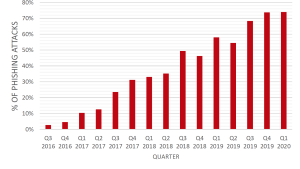
Abuse of HTTPS on Nearly 75% of all Phishing Sites

Since 2015, PhishLabs (now Fortra Brand Protection) has tracked how threat actors abuse HTTPS or SSL certs. In particular, threat actors often use HTTPS on their phishing sites to add a layer of legitimacy, better mimic the target site in question, and reduce being flagged or blocked from some browsers. In 2014, threat actors hit a significant milestone in this usage when more than 50% of phishing...
Blog

11 Types of Emails Employees Report to Security Teams

You receive an email, you are unfamiliar with the sender's name or email address, and they are offering you a new service or deal on something. Is it malicious? Not necessarily. Perhaps you forgot about signing up for a newsletter a while back.Malicious vs. BenignAccording to Symantec, 5.5% of business emails are classified as spam. With the average business account receiving around 104 emails per...