Blog

Blog

Imitation May Be the Highest Form of Flattery, But Brand Impersonation Is Not

Imitation is often the clearest sign your brand is making an impact. Whether through a viral moment or a market-defining launch, your success doesn’t just capture attention. It sets the pace, inspiring both competitors and collaborators to follow your lead.But when imitation crosses the line into online brand impersonation, the effects shift from flattering to potentially disastrous. Deceptive...

Blog

When Digital and Physical Threats Intertwined: The Need for Executive Protection

Executives face growing risks from both digital and physical threats, with online exposure often leading to real-world dangers like harassment or security breaches. Traditional physical security alone is no longer sufficient — organizations must integrate digital executive protection, including threat monitoring, data exposure mitigation, and coordinated response across teams.
Blog

UDRP Domain Takeover vs. Domain Takedown

In the world of domain ownership, the need for disputes and enforcement can occur. But how should they be handled? What’s the difference between Uniform Domain-Name Dispute-Resolution Policy (UDRP) domain takeovers and a domain takedowns? Let’s take a closer look at the processes.What Is a UDRP Domain Takeover? Established by the Internet Corporation for Assigned Names and Numbers, UDRP is the...
Blog

Top 10 TLDs Abused

Domains remain one of the most exploited tools in the hands of threat actors, fueling phishing schemes and victim manipulation. In our latest Quarterly Threat Trends & Intelligence Report, we uncover how attackers are weaponizing Legacy Generic (gTLD) and Country Code (ccTLD) top-level domains — along with HTTPS and free security certificates — to infiltrate and target enterprises. Top-level...
Blog

Look-alike Domain Mitigation: Breaking Down the Steps

Look-alike domains remain some of the most consistent elements of cyber-attacks targeting organizations. At a high-level, there are two ways to mitigate the threat of a look-alike domain: Remove the threat completely by taking it offline, or block attacks on your users by implementing IT security controls. If we dissect the construction of a look-alike domain, we see where each step in its...
Blog

The Threat of Look-alike Domains Explained

Every year, cybercriminals spin up hundreds of thousands of look-alike domains — tiny, deceptive variations of real web addresses that exist purely to trick people and steal money. A look-alike domain is a nearly identical domain name, registered with intent to impersonate a legitimate brand. In this post we’ll show how domain names power online communication, break down the anatomy of these...
Blog

How to Detect Look-alike Domain Registrations

Malicious domains play a central role in a wide range of cyberattacks that can severely damage a brand’s reputation. Spoofed domains are often quick and inexpensive to create, making them effective tools for launching phishing campaigns and distributing malicious emails. To identify and respond to domain-based threats targeting your organization, security teams must adopt advanced, well-defined...
Blog

Digital Risk Protection vs. Digital Threat Intelligence

Digital Risk Protection (DRP) is rapidly gaining attention among CISOs and security professionals. Once seen as a subset of Digital Threat Intelligence (DTI), DRP has evolved into a distinct security discipline, recognized by analyst research, including the Gartner Hype Cycle, for its ability to address a wide range of external cyber threats. Many organizations now rely on DRP daily to protect...
Blog

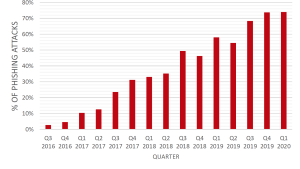
Abuse of HTTPS on Nearly 75% of all Phishing Sites

Since 2015, PhishLabs (now Fortra Brand Protection) has tracked how threat actors abuse HTTPS or SSL certs. In particular, threat actors often use HTTPS on their phishing sites to add a layer of legitimacy, better mimic the target site in question, and reduce being flagged or blocked from some browsers. In 2014, threat actors hit a significant milestone in this usage when more than 50% of phishing...
Blog

Brain-hacking: Why Social Engineering Is So Effective

You encounter social engineering tactics every day, often without even noticing them.From an information security perspective, Wikipedia defines social engineering as the psychological manipulation of people into performing actions or revealing confidential information. While that definition is accurate, it only captures part of the picture. Social engineering extends beyond cybersecurity and...
Blog

How to Get Started with NIST 800-171 Compliance

Are you ready to report your NIST 800-171 compliance status by the end of the year? If you do business with the federal government, you need to comply with SP NIST 800-171 by the end of the year. Now is the time to implement your compliance plan.