Blog

Blog

Healthcare Data Security: Challenges & Solutions

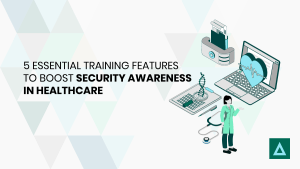
The sanctity of patient/doctor confidentiality in the digital age requires strict security measures to safeguard healthcare data. This requires balancing data protection and privacy with a low-friction, privileged access environment that prevents unauthorized access to patient records. What Is Healthcare Data Security? Healthcare data security is the process and framework that ensures electronic health records (EHR) are stored securely to prevent unauthorized access to patient information. Apart from the data, healthcare data security also extends to the devices, computers, endpoints, and networks used by healthcare providers and third-party vendors. The Risk Factors in Healthcare Data Security Generally, EHR face the same risks as intellectual property and sensitive corporate data. However, privacy issues are more resonant with patient data, coupled with the confidentiality of its personally identifiable information (PII). In addition to medical data, patient records often contain financial details like bank accounts and credit card information. This is worth a lot of money in the black markets of the dark web, making it a prime target for criminals who subsequently use it for identity theft fraud. Protected health information (PHI) is as varied as DNA samples, fingerprint scans, digital files, and database records. The multifaceted nature of healthcare data, ranging from structured and unstructured variety, significantly adds to the challenge of protecting it. As a result of the massive amount of lucrative patient data it stores, the healthcare industry is one of the biggest targets for cyberattacks. Unfortunately, most hospitals and healthcare providers face an asymmetric battlefield regarding healthcare data security. Unlike large enterprises, most healthcare providers lack the resources and expertise to equip themselves with cutting-edge cybersecurity to thwart advanced persistent threats. This lack of resources and expertise results in a failure to continuously keep patient data secure. Below are some of the risk factors that compromise healthcare data security: The Use of Legacy Systems Hospitals are notorious for using legacy systems. By their very definition, legacy systems are antiquated. This risk posed by their outdated nature is compounded by the fact that technological change moves with rapid speed and velocity. A legacy system comes in the form of old apps, network protocols, and operating systems. This obsolete technology is often riddled with security flaws that offer hackers abundant security loopholes to exploit, and yet because they are often discontinued, they lack technical or customer support to address those security flaws. Inadequate Hardened Security of Medical Devices Medical devices like X-rays and MRIs are also a potent vectors of attack for hackers. Although they provide lifesaving treatment and store patient data, medical devices typically lack the hardened security perimeter of network devices such as computers and laptops. To compound the problem, like most IoT devices, their endpoints are increasingly connected to the internet, providing an easy entry point for hackers to gain access. Moreover, once these devices and their installed software reach their end-of-life, vendors stop providing the necessary support and updates to keep them secure. Unsecured or Poor Wireless Networks With the prevalence of electronic records and the digitalization of healthcare operations, hospitals and care providers need network access to function. However, without diligently securing these wireless networks, patient data can be compromised through packet sniffing and man-in-the-middle attacks. In addition, patients and medical staff routinely need to access EHR remotely, opening up more opportunities for endpoint attacks. Improper Patch Management and Security Protocols The proliferation of medical and computing devices in hospitals makes keeping track of regular software patches and upgrades challenging. Risk factors posed by insufficient security protocols are poor password management–especially on systems containing PHI–and using default passwords and factory-settings configurations on both network and medical equipment. Healthcare Data Security Standards The importance of healthcare has compelled authorities around the world to establish strict security standards in storing and handling PHI. The Health Insurance Portability and Accountability Act (HIPAA) is applicable in the United States and mandates the protection of certain health information. Maintaining HIPAA compliance ensures that organizations handle patient data carefully to avoid significant fines, penalties, and even lawsuits. The Health Information Trust Alliance (HITRUST) is globally recognized as a risk management framework. Among other certifications, it offers various levels of adaptive assessment to quantify risks. ISO 27001 / ISO 27799 have emerged as international standards for protecting confidential medical information. ISO 27001 defines best practices and is adopted by organizations in healthcare, financial services, and government dealing with sensitive data. The Most Common Healthcare Data Security Challenges Healthcare is a complex ecosystem, with an astronomical number of devices and medical equipment used daily. This makes it difficult to keep on track of the security needs of individual units. While it's highly sensitive, healthcare data also needs to be securely shared with relevant stakeholders to serve the patient's best interest. These factors create many challenges to effectively secure healthcare data. Below are a few of the challenges that cybersecurity experts need to contend with in the healthcare domain. Data Breaches Some data breaches result from malicious intent, while other data leakages occur inadvertently from improper handling of EHR due to negligence or carelessness. Here are some of the most prevalent cyber threats and vulnerabilities that result in healthcare data breaches: Ransomware attacks Electronic health records vulnerabilities Insider threats from disgruntled employees Unintentional disclosure of patient information Lost, stolen, or misplaced devices Identity fraud Email phishing scams DDoS attacks Best Practices For Safeguarding Healthcare Data? To be effective, healthcare data security solutions need to incorporate the following best practices:
Blog

What To Look for in a HIPAA-Compliant Email Provider

Whether you work for a doctor's office, healthcare organization, or just find yourself handling protected health information or ePHI, this blog breaks down what to look for in a HIPAA-compliant email service provider.
Vulnerability Research

Patch Tuesday Update - June 2023

Today’s Microsoft Security Update addressed 78 vulnerabilities, including 6 that are rated as Critical. None of the vulnerabilities included in the Patch Tuesday release appear to be currently exploited in the wild.Of note, Microsoft SharePoint Server Elevation of Privilege Vulnerability (CVE-2023-29357) appears to allow an attacker to bypass authentication using a spoofed JWT authentication token...
Blog

Fortra VM 6.5.4 Updates

Every release helps update and pave the way for additional features and improvements. Based off of user feedback, here are the recent updates for Fortra VM (formerly Frontline VM).Linux AgentScan Linux assets that are not always connected to the network during normal network-based scan. Install and configure a schedule for Agents to check-in after the initial baseline scan is completed. Agents...
Blog

How Enterprise VM Keeps Up with Modern Threats

Vulnerability management is known for being a foundational cybersecurity practice. While open-source VM solutions have perhaps provided an introduction to the benefits of VM, the modern threat landscape makes it so organizations need more advanced and reliable tools to stay secure. Here’s why enterprise grade VM solutions are more essential now than ever. Beating complexity with technology...
Blog

Data Classification and Data Loss Prevention (DLP): A Comprehensive Data Protection Strategy

Data is the world’s currency and has been for some time. Protecting data should be at the top of the list for organizations of any size, and the heart of any security strategy. Think about it: the purpose of any firewall, email solution, compliance regulation, or XDR platform is to keep data safe. Why not cut to the heart of it with a dedicated Data Loss Prevention (DLP) solution? And why not...
Blog

What Is Intellectual Property Infringement?

Intellectual property is one of the cornerstones of modern capitalism. It encourages entrepreneurial risk-taking by ensuring individuals, organizations, and businesses reap the rewards of their creative ingenuity.
Blog

Key Insights for Zero Trust in 2023

With the release of the 2023 Zero Trust Security Report, it’s a good time to reflect on the seismic shifts that have happened in the industry regarding network security. Discover key insights and impacts of Zero Trust in 2023.